
The complete guide
How to Choose a Pie-Cut Corner Hinge for Your Cabinet
A corner cabinet can become awkward to use when its door drops, catches or no longer folds as expected. The hinge is one part to check, but choosing a replacement takes more than finding hardware that looks close. Corner doors have a particular shape and movement, and a small mismatch can affect the whole opening.
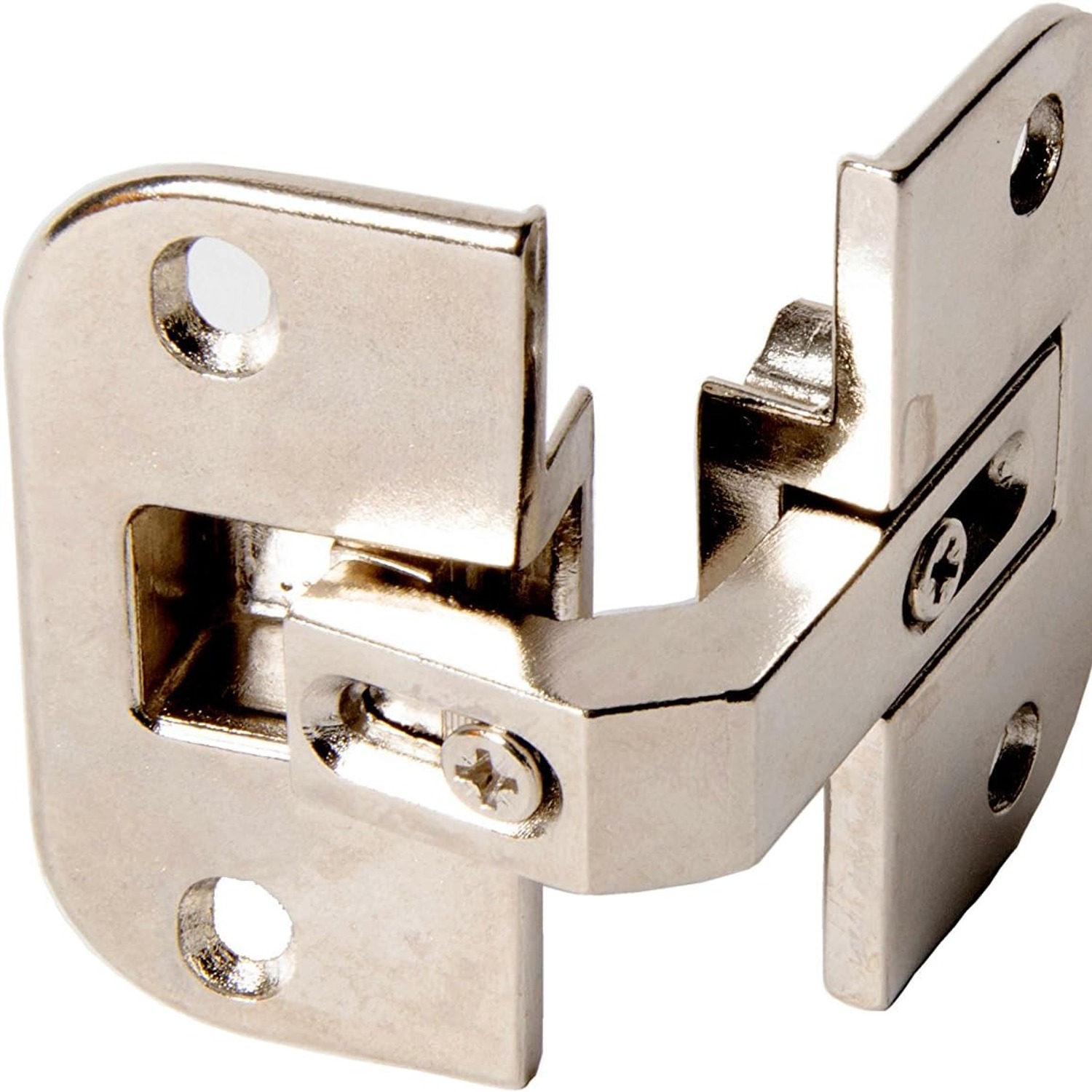
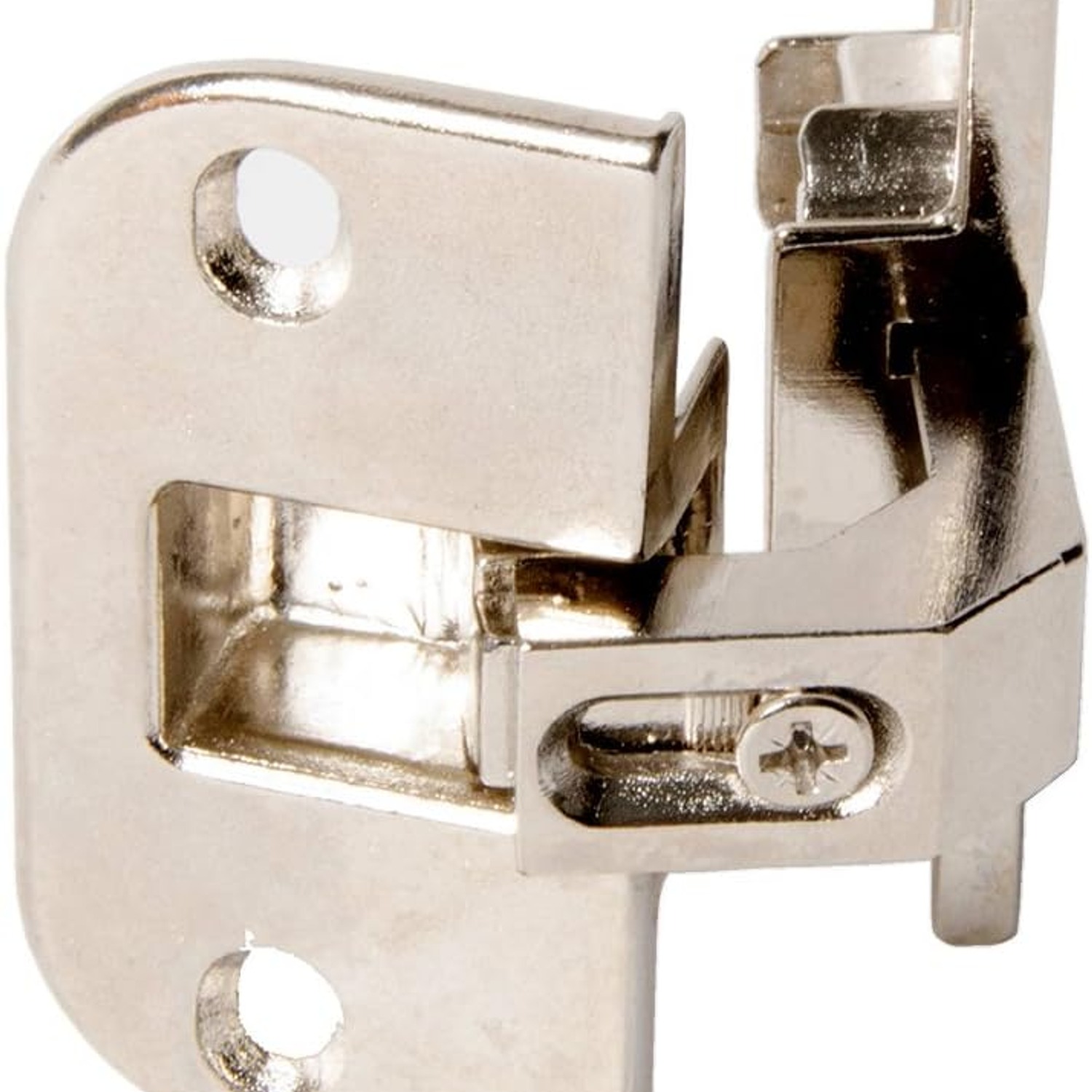
The Hafele Pie-Cut Corner Hinge is listed for compatible doors from 5/8 to 15/16 inch thick. It has three-way adjustment, a free-swinging action and a polished nickel finish. This guide explains what those details mean for your purchase, what still needs checking and how to approach a repair without making avoidable changes to the cabinet.
Start with the door, not the product photo
Before shopping for a corner cabinet hinge replacement, look at the full door arrangement. Watch where each panel moves and which hinge joins which parts. Take photos with the door closed, partly open and fully open. Those views are often more useful than a close-up of the hinge alone.
A pie-cut corner door arrangement is different from a simple, single cabinet door. Hardware that works in one position may not work in another. The phrase “corner cabinet door hinge” helps identify a broad category, but it does not promise that every hinge in that category is interchangeable.
If the old hinge has a readable part number, record it. Also note whether the problem is a broken component, a loose fixing or a door that has gradually lost alignment. A new hinge will not necessarily solve damage around its mounting points.
What this Hafele hinge offers
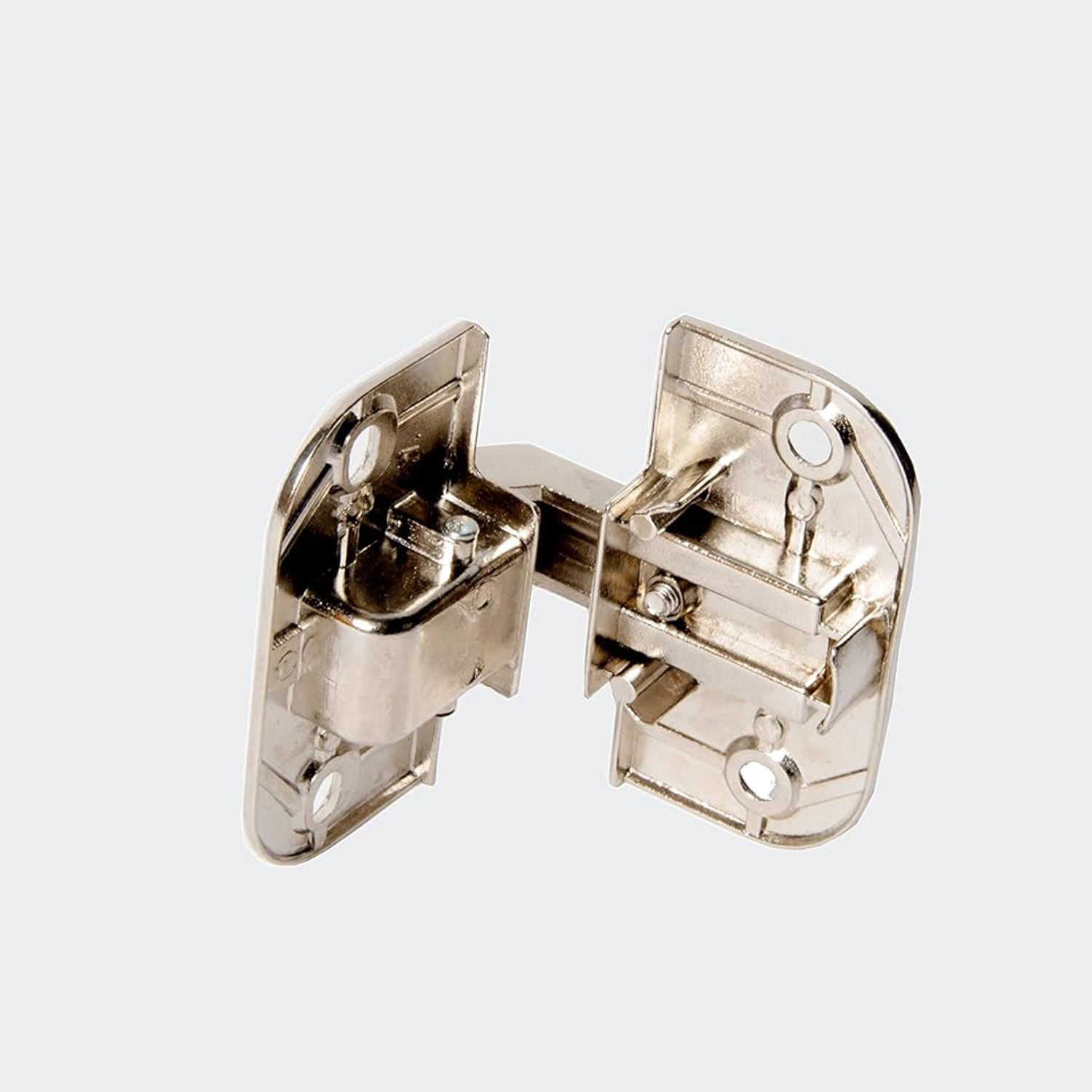
This model is identified as FBA_343.90.710. The supplier details list a door-mount fitting, metal material and three holes. Each unit contains one pie-cut corner hinge, with a listed weight of 141 g.
The finish is polished nickel. That is useful when comparing visible hardware, though a finish name alone cannot guarantee an exact visual match with older fittings. Wear, lighting and the condition of the existing hardware can affect the comparison.
Three-way adjustment is another listed feature. It gives you a way to fine-tune the position of a compatible door after installation. However, adjustment should not be treated as a way to make an unsuitable hinge fit. The basic geometry and fixing layout still need to be right.
Understand the free-swinging action
This is a free swinging cabinet hinge. The maker does not list that it has soft-close or self-closing action, so neither feature should be part of your buying assumption.
That distinction matters if you are replacing hardware because you want a different closing feel. A suitable replacement may restore the intended movement without adding a damping function. If slow closing is your main goal, check the full hardware requirements before ordering.
Do not assume an adjustable corner hinge will change the opening angle either. Adjustment and opening range are different specifications. This record gives no opening angle, so that point needs separate confirmation where nearby doors, drawers or handles could interfere.
Check door thickness carefully
The stated thickness range is 5/8 to 15/16 inch. Measure the door itself and compare it with that range before going further. If the door has a shaped edge, choose a measurement point that reflects the actual hinge mounting area.
Being inside the thickness range is a useful first check, not final proof of compatibility. The hinge must also match the way the door is mounted and the space available for movement.
Avoid rounding a measurement just to bring it within the range. If your result is near a limit or hard to read, measure again or ask someone experienced with cabinet fittings to check it. A few minutes spent here can prevent unnecessary drilling later.
Confirm the measurements that are missing
Overall dimensions and hole spacing are not listed by the maker. There is also no stated load capacity. These gaps matter when you are trying to make a direct replacement rather than starting with a fully planned installation.
Measure the old hardware and record the fixing positions. Then obtain confirmed measurements for the proposed replacement before assuming the two will match. The fact that both hinges have three holes does not establish that those holes sit in the same places.
Door size and weight also deserve attention. The listed 141 g is the weight of the hinge, not a supported door weight. If the door is large, unusually heavy or part of a changed layout, ask a cabinet fitter to assess the hardware needed.
Decide whether this is the right repair
This pie cut cabinet hinge is worth considering when you have a compatible corner door arrangement and can confirm the fitting details. It may suit a targeted repair where the rest of the hardware is still sound.
It is less sensible to order on appearance alone. Similar-looking folding cabinet door hinge designs can have different mounting requirements or movement. A close visual match is a starting point for comparison, not a fitting guarantee.
Think about the cause of the trouble as well. Loose screws, worn mounting holes and damaged door material may need attention alongside the hinge. Inspect the surrounding area before deciding that a single replacement part is the complete answer.
Plan the quantity and any extra parts
The supplied quantity is one hinge. It is not a pair, and the maker does not list how many hinges a particular door needs. Count the existing fittings and assess their condition before ordering.
If more than one hinge is worn, get advice on whether replacing a matched set makes sense. If only one has failed, check that the proposed replacement will work correctly with the remaining hardware. Mixing parts without checking can leave the door moving unevenly.
The included components list confirms only the hinge. Screws, separate mounting plates and fitting instructions are not confirmed. Check what your installation needs before removing the old hardware, especially if the cabinet must remain usable during the repair.
Prepare for fitting without rushing
Clear the area around the cabinet so the door can be handled safely. Take reference photos before loosening anything. Keep any removed parts together and note where they came from.
Support the door before removing or adjusting a hinge. Do not leave its weight hanging from hardware that has been partly released. If you cannot hold it securely while working, arrange help or use a cabinet fitter.
Compare the new part with the old one before making permanent changes. If fixing positions do not match, stop and review the fit. Forcing a screw into a nearby position or enlarging a hole without a plan can turn a small repair into a larger one.
Use adjustment as a finishing step
Once a compatible hinge is fitted according to the appropriate instructions, check the door movement slowly. Watch the gaps and look for contact with adjacent surfaces. Do not force the door through a point where it catches.
The listed three-way adjustment can help with alignment, but the maker does not give adjustment travel or a screw-by-screw procedure. Use the correct fitting information for the hardware rather than guessing which screw controls each movement.
Make small changes and check the result between them. If alignment remains poor, revisit the installation and compatibility checks. Repeated adjustment cannot correct a hinge that is wrong for the door arrangement or fixed to an unsound mounting point.
Keep the hinge clean and check changes early
For routine care, wipe the polished nickel hinge gently with a soft cloth and dry it after cleaning. Avoid abrasive pads and harsh cleaners that could damage the finish.
Pay attention if the door begins to rub or feels different during use. Check for loose fixings and visible changes around the mounting area. Support the door before making adjustments, even if the change seems minor.
No lubrication schedule is supplied in the maker's listing. If the hinge develops noise or stiffness, seek suitable care advice rather than applying a product at random. First check whether dirt, misalignment or another obstruction is affecting movement.
Check delivery and returns before ordering
A repair often starts with a cabinet you want back in use quickly. This record does not provide a delivery lead time, so check the current estimate for your address before planning the work.
Read our returns policy as well, particularly any conditions that apply once hardware has been fitted. Keep the model number and your measurements handy if you need help confirming suitability.
For someone else’s repair, the same checks apply. A single pie cut hinge can be a useful practical gift only when the recipient has confirmed the exact part. Guessing the fit is more likely to create another task than finish one.
The short version
Choose this Hafele corner hinge by its fitting details, not just its name. It is supplied singly, has a polished nickel finish and offers three-way adjustment with free-swinging action.
Confirm the 5/8 to 15/16 inch door thickness range, then check dimensions, mounting positions and required movement. With those questions settled, you can approach the repair with a much clearer idea of whether this is the right part.