
The complete guide
Choosing Solid Brass Butt Hinges for Cabinets and Boxes
A small hinge can cause a surprising amount of trouble when it is the wrong fit. A door may rub its frame, an old screw pattern may not line up, or a box lid may sit at an angle. Choosing the right hardware starts with measurements, not just a finish that looks good.
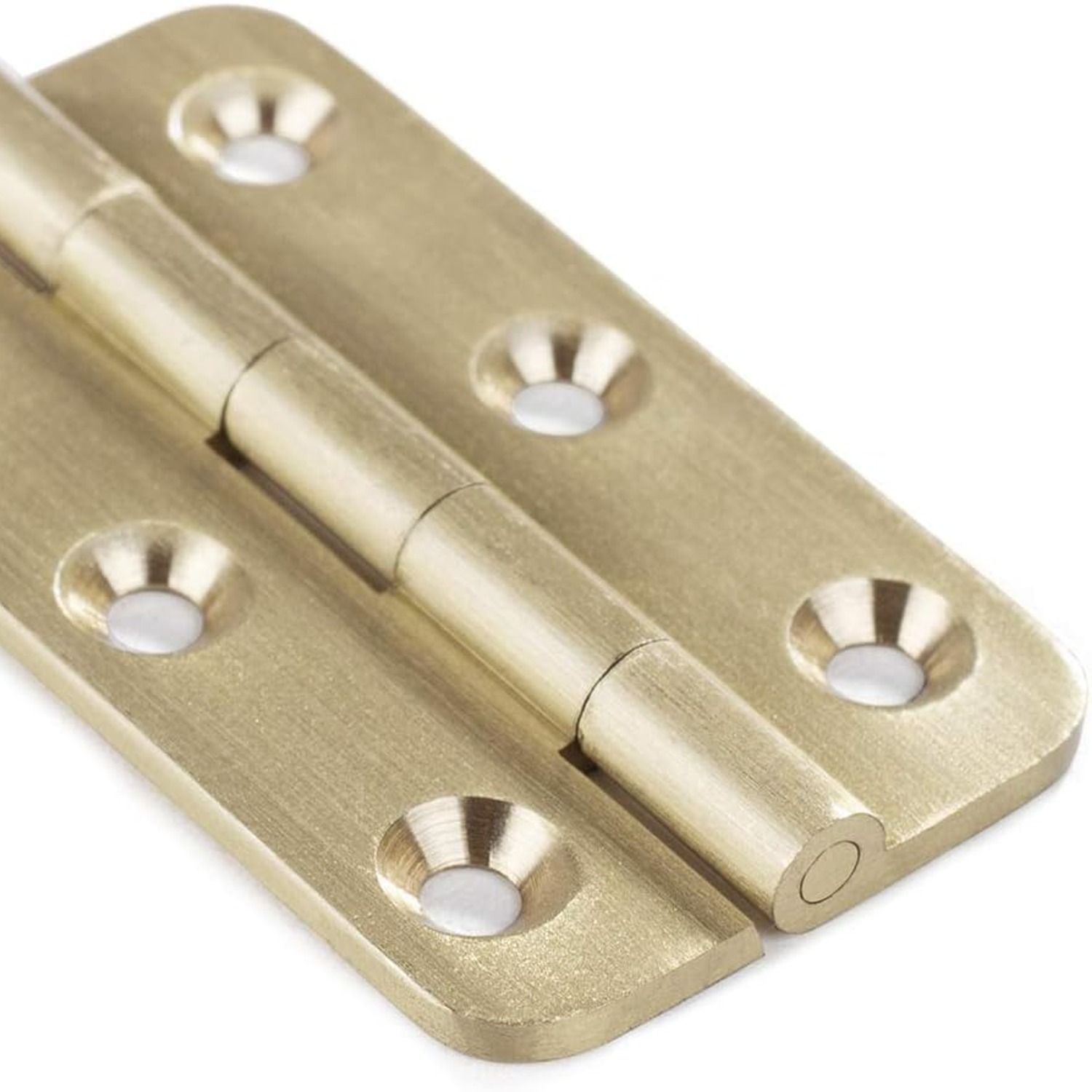
These keenkee solid brass butt hinges come in a four-pack with matching wood screws. They have a brushed brass finish, rounded corners and a listed thickness of 2 mm. That gives you several useful details to compare with your project. It does not, however, replace checking the door, lid or frame where you plan to fit them.
This guide explains what to check before buying, how to think about installation and how to look after the coated finish.
Start with the way your project opens
A butt hinge connects two parts with leaves that turn around a joint. One leaf attaches to the door or lid, while the other attaches to the frame or box. The position of that joint affects the way the moving part clears its support.
Before choosing cabinet door butt hinges, look at the joint from the side. Think about where the hinge will sit and what might catch as the door opens. A nearby trim, a thick edge or a tight gap can all affect the fit.
For an existing piece, take a clear photo before removing the old hardware. It gives you a reference for the original position. If the old door worked well, its hinge layout is a useful starting point. If it rubbed or sagged, copying that layout may also copy the problem.
Understand the listed size
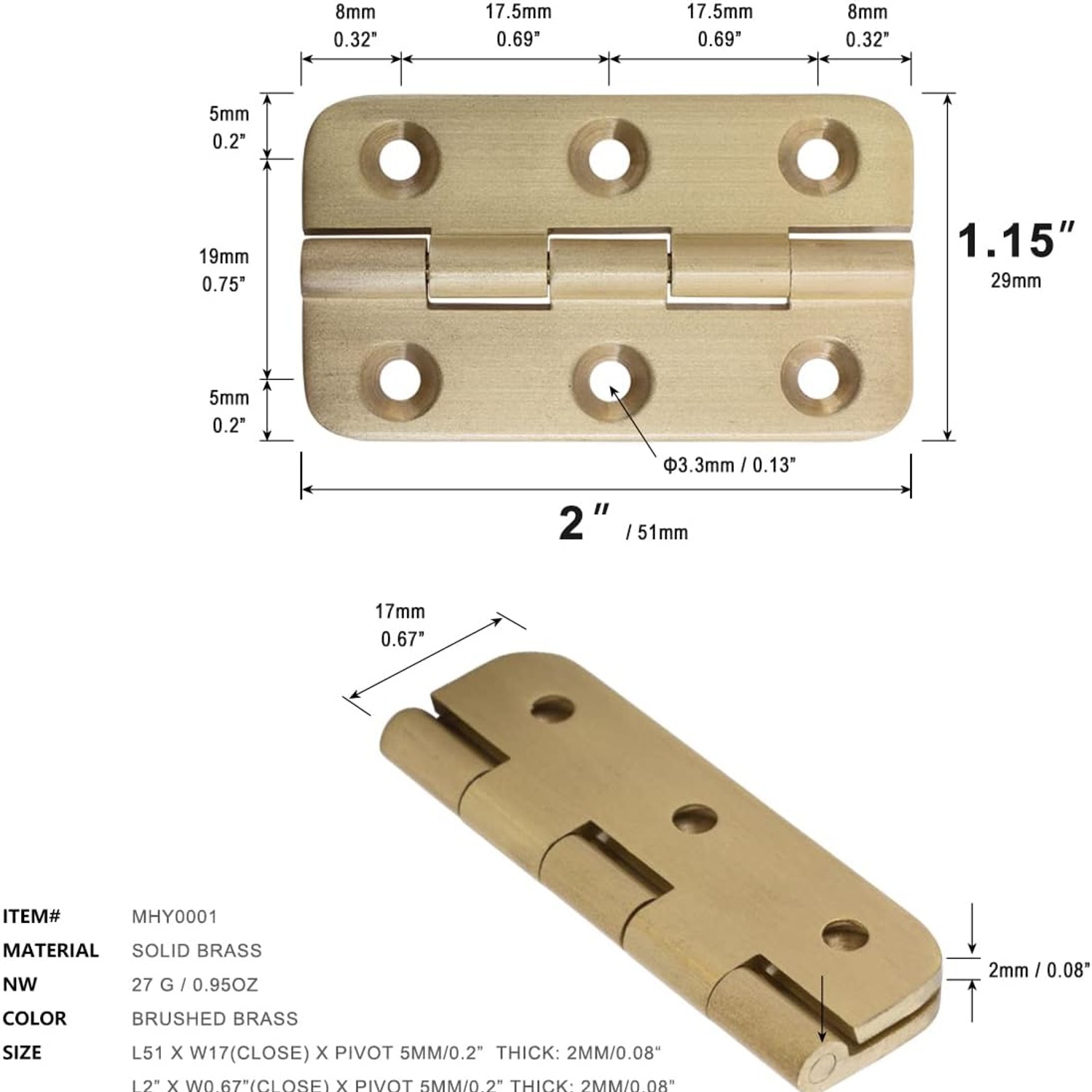
These hinges are described as 2 inch brass hinges. The supplier gives open dimensions of 2 × 1 1/8 inches and closed dimensions of 2 × 11/16 inches. The product details also list 5.1 × 2.8 cm.
Use those figures as a starting point, then check the actual space available. A nominal size does not tell you the screw spacing, joint projection or every clearance needed for installation. Those details matter when replacing hardware in an existing recess.
Measure the old hinge while open, if you have one. Note its length and width, then look at the leaf thickness and corner shape. These rounded corner hinges may not follow the same outline as square-corner hardware.
If the fit needs to be exact, resolve any missing measurements before cutting wood. It is easier to ask a question than to repair a recess made for the wrong hinge.
Choose the finish with the whole piece in mind
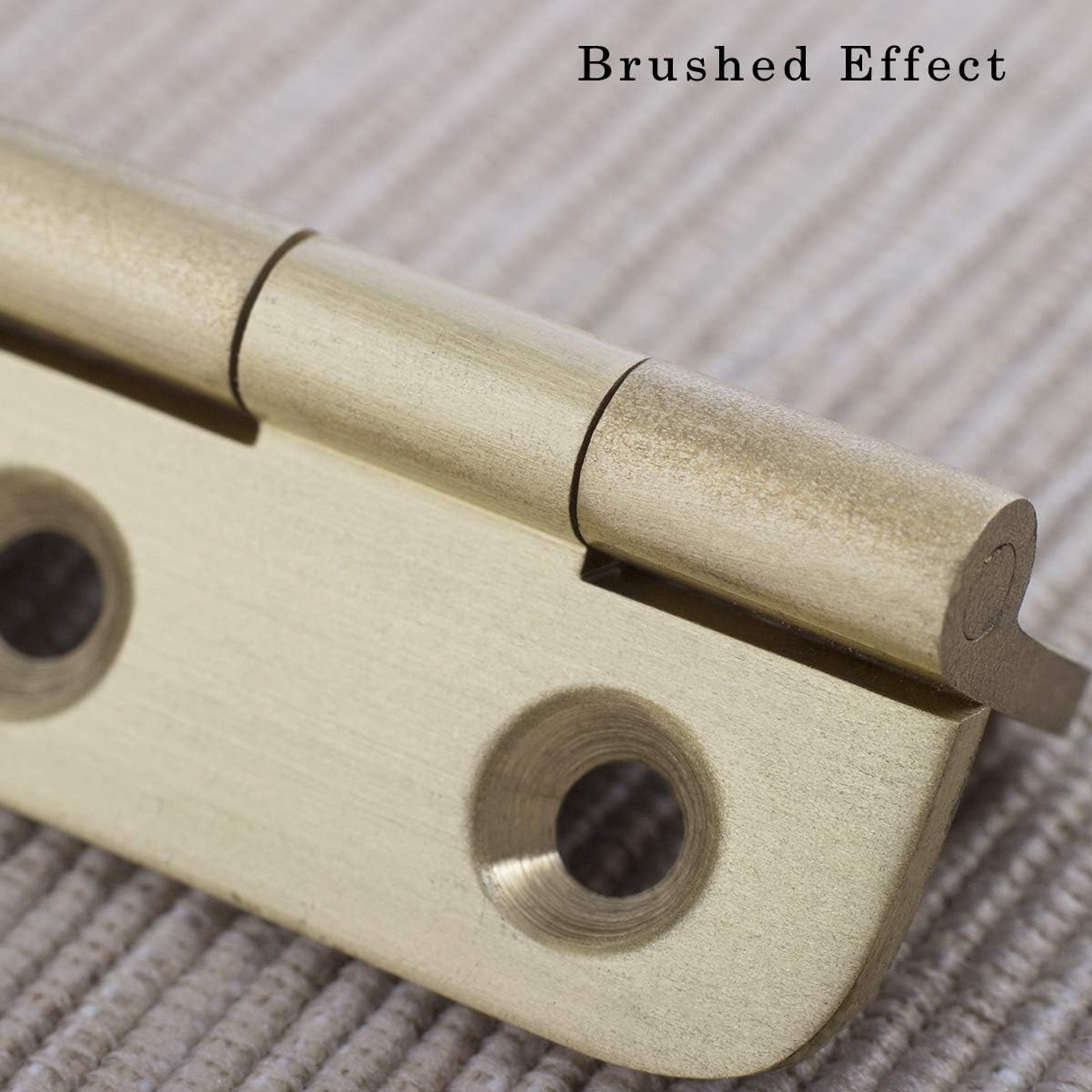
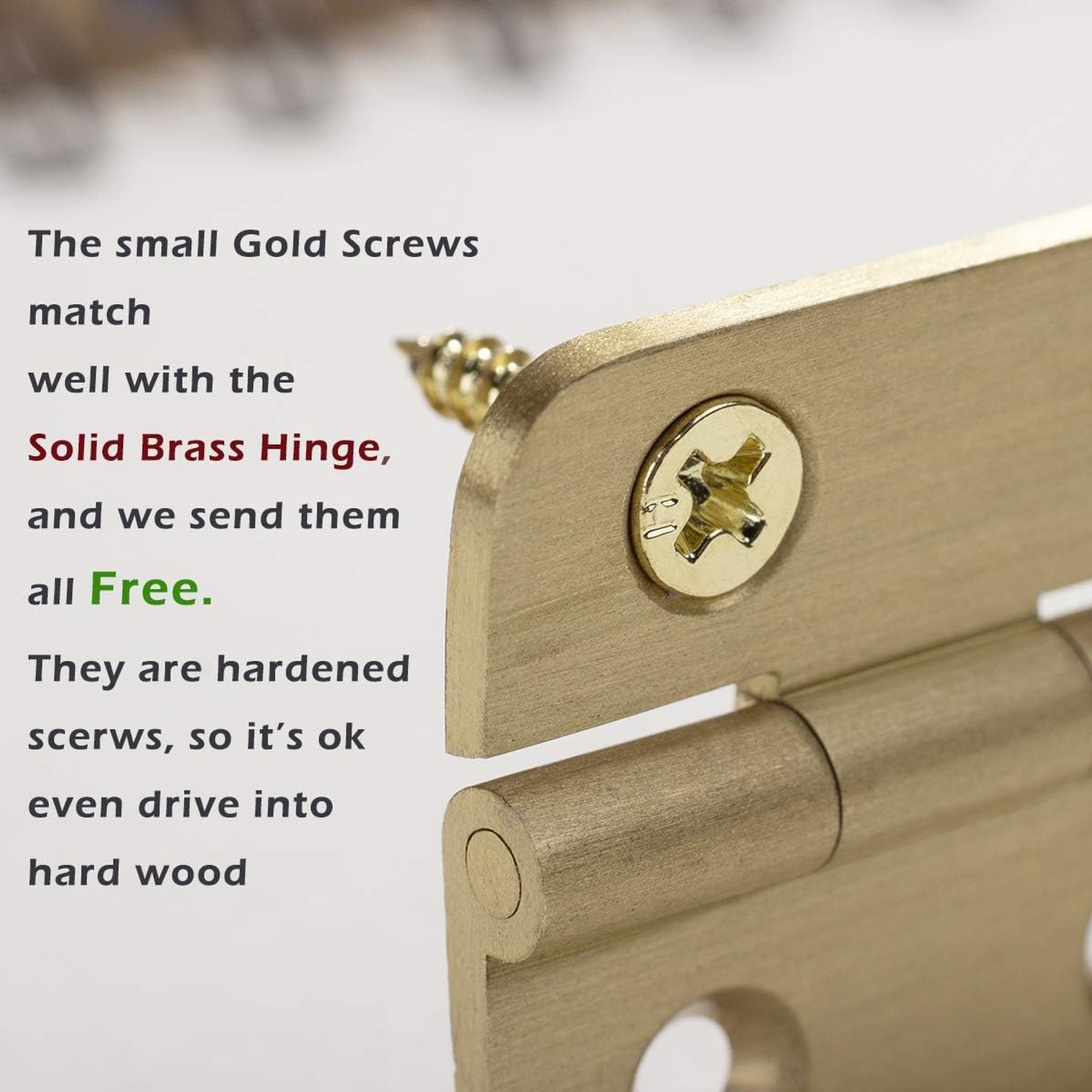
The supplier describes solid brass construction with a brushed surface and clear top coating. The colour is listed as brushed brass. This makes the set worth considering when you want visible metal detail on a cabinet or wooden box.
Look at more than the hinge by itself. Handles, catches and nearby fittings can change how a finish appears. Two products both called brushed brass may still differ in tone or surface texture, so the name alone is not a promise of an exact match.
For a new project, choosing the visible hardware together can help you make a more consistent choice. For a repair, decide whether a close match is enough or whether the old and new parts will sit directly beside each other.
The clear coating also matters for care. Treat the surface as coated metal rather than assuming that any traditional brass polish will be suitable.
Check whether the application is suitable
Small brass hinges can be considered for cabinet doors, boxes and lids where the dimensions and fixing arrangement suit. Those uses are described in the supplier information. They do not establish a load capacity for a particular build.
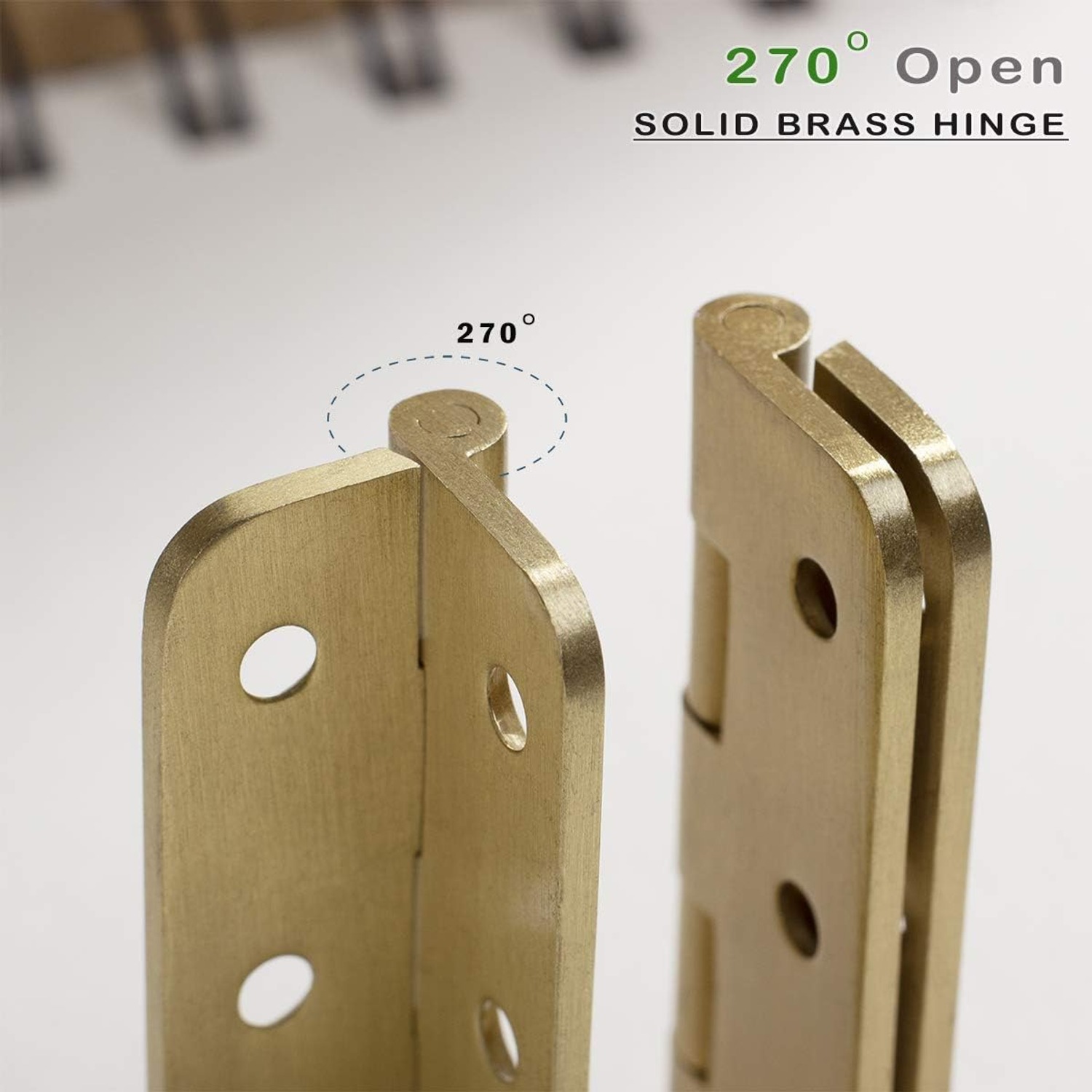
No weight rating is supplied for this set. There is also no stated opening angle or outdoor-use rating. Avoid filling those gaps with assumptions, especially for a large door or a lid that could cause injury if it fell.
A lid needs separate thought. A normal pivoting hinge should not be treated as a lid stay unless that function is stated. If you need the lid to remain open, plan suitable support rather than relying on these brass lid hinges alone.
For a demanding installation, get advice based on the size, weight and use of the finished piece. The hinge dimensions are only part of the decision.
Compare replacement hinges carefully
Replacement cabinet hinges need to match more than length. Existing screw holes, recess depth and the position of the hinge joint can all affect whether the door closes properly.
Remove one old hinge only when the door is safely supported. Compare its outline with the listed dimensions, and check how deeply it sits in the wood. Look for loose holes, split edges or damaged areas around the screws.
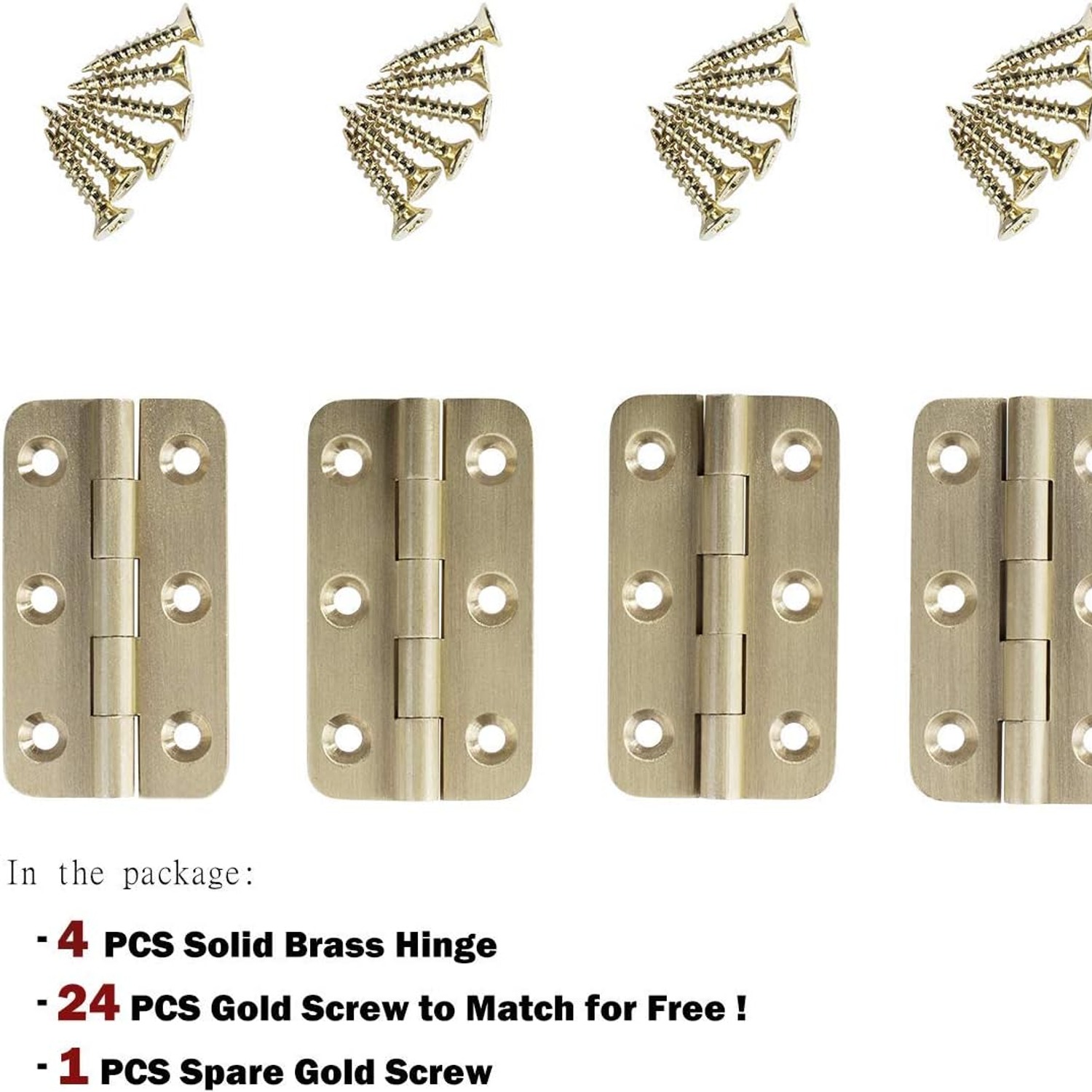
The six countersunk hinge holes give defined fixing positions, but the spacing is not supplied in the maker's listing. Do not assume the new screws will drop into the old holes. Forcing a near match can pull the hinge out of line.
If the old fixing area is damaged, deal with that before installing new hardware. A new hinge cannot make weak timber sound. Seek repair advice if you are unsure how to restore a secure fixing surface.
Plan around the pack contents
The set contains four hinges and 25 wood screws, including one spare. Each hinge has six fixing holes. The included screws are gold-coloured with Phillips heads, intended to coordinate with the hinges.
Count the hinges your project needs before ordering. Four supplied hinges do not establish how many are right for one door. That depends on the application, and the maker's listing provides no door-size guidance or load table.
The screw dimensions are also unspecified. Before fitting, compare their length with the thickness of the wood. Check where the tip could emerge and whether the fixing area gives enough room.
Brass hinges with screws can save you a separate hardware search, but the supplied screws still need a fit check. If different screws are required, choose them for both the countersunk holes and the material they will enter.
Take time with positioning
A careful dry fit is useful before making permanent changes. Hold or support the parts in their intended position and check how the hinge leaves sit. Mark the positions only after you are satisfied with the alignment.
Whether a recess is needed depends on the construction and intended gap. Do not cut one simply because another project used one. Check the way your own door or lid will close.
Pilot holes are generally worth considering for wood screws, particularly near an edge. Select the drill size to suit the actual screw and timber. The brief does not provide a drill size, so there is no single measurement to copy here.
Keep the work supported while fitting the hardware. Check movement as you go rather than waiting until every screw is fully tightened. If something binds, stop and find the cause instead of forcing the door through its travel.
Think about a box differently from a cabinet
Small wooden box hinges often sit close to narrow edges. That makes screw length and placement especially important. Check both the box wall and the lid, since they may have different thicknesses.
A cabinet door brings other questions. It needs to clear the frame, meet the opening evenly and work alongside any catch. A hinge that looks right on a loose piece of timber may behave differently once the whole cabinet is assembled.
For either project, test the intended movement before adding a final catch or other hardware. That can help you spot a clearance problem while changes are still easier to make.
The same brushed brass hardware may suit the look of both projects, but the fitting checks are not identical. Let the construction guide your choice.
Keep cleaning simple
Use a soft cloth for routine cleaning, then dry the surface. Avoid abrasive pads and harsh cleaners that could affect the clear coating. There is no need to begin with an aggressive polishing routine.
If you want to use a cleaning product, check that it is suitable for clear-coated brass. A product intended for bare brass may not be the right choice for this surface.
From time to time, inspect the screws and watch for movement around the leaves. If a door starts rubbing or a lid becomes uneven, check the cause before continuing to use it. Tightening screws without looking at the surrounding wood may miss a damaged fixing point.
Keep any spare screw somewhere labelled. It will be easier to identify later than a loose screw mixed into a general hardware tin.
The short version
These keenkee woodworking hinges offer four matching solid brass hinges with a brushed finish, rounded corners and included wood screws. The listed 2 inch size and 2 mm thickness are useful starting points for a cabinet or box project.
Before ordering, compare the open and closed dimensions with your available space. Check the fixing layout, timber thickness and required movement. For heavy loads, outdoor exposure or lid-holding needs, seek further information rather than assuming those functions.
A good hardware choice is one that fits the project as well as the look. A few careful checks now can save rework once the wood is cut.